

Mr. The Plague here. Late August into early September 2026, public reporting spent a lot of time on publish paths, tokens, and replay. Boards will still ask what it means for you. The useful answer is not a recap of the coverage. It is a packet that maps that window onto controls you actually run.
Thesis you can repeat in the room: public reporting in this window is noise unless you map it to four controls. Those four are the publish path, sessions and tokens, restore, and replayable findings. Brief the packet, not the headline.
SquidSec is U.S. Veteran-Owned, Cleveland. We write this for CISOs and buyers of pentest work, in plain language, with no client names and no invented CVE theater.
If the packet cannot name the path, the token class, and the replay window, it is still a press recap.
01 Summary table
Give the board one table they can vote on, then stop restating the news.
The packet opens with a decision, not a clip. You are asking them to accept residual risk, fund rotation, or freeze a path. Scope is your publish surfaces: repo, CI, registry, CMS, and cloud deploy. Residual risk, said in one breath, is a stolen token or session plus replay of a signed or cached artifact.
Use the table as the one-pager. Each row turns a public theme into an artifact, an owner, and an as-of date. If a cell is empty, that is the finding. Do not fill it with a headline.
| News theme | Packet artifact | Owner | As-of date |
|---|---|---|---|
| Publish path | Who can ship, from where, with what identity and gate | Release / platform | This quarter |
| Sessions / tokens | Class, lifetime, last rotate, who can mint | Identity / secrets | This week if the class matches the story |
| Restore | What you can rebuild, from where, with whose keys | Infra / backup owner | Last restore test |
| Replayable findings | A test another team can re-run on the same path | Appsec / platform | Last pass or fail |

02 Root cause
The public story is a clock. Root cause in your estate is still how something publishes.
Coverage tells you that publish paths, tokens, and replay are in the conversation. It does not tell you why your pipeline can still ship. Root cause for the packet is the chain: identity, gate, leftover secret, leftover artifact. Until you name that chain, you are briefing the news.
Write the cause in control language. Who can still publish. Which token class is still live. What an old artifact can still do. Do not write that you are unaffected unless you can point to a named control and a date. Do not write zero residual risk. Do not invent CVE identifiers or victim names to make the paragraph feel specific.
03 Supply chain
If a third party can land a package in production, that is still your publish path.
Map the chain you actually use: source repo, CI, registry, CMS, cloud deploy, bot accounts, and mirrors. Then ask who can ship through a vendor job, what you pin, and what you still accept from cache. Supply chain in this packet is not a logo wall. It is whether an upstream publish can become your production change without a gate you own.
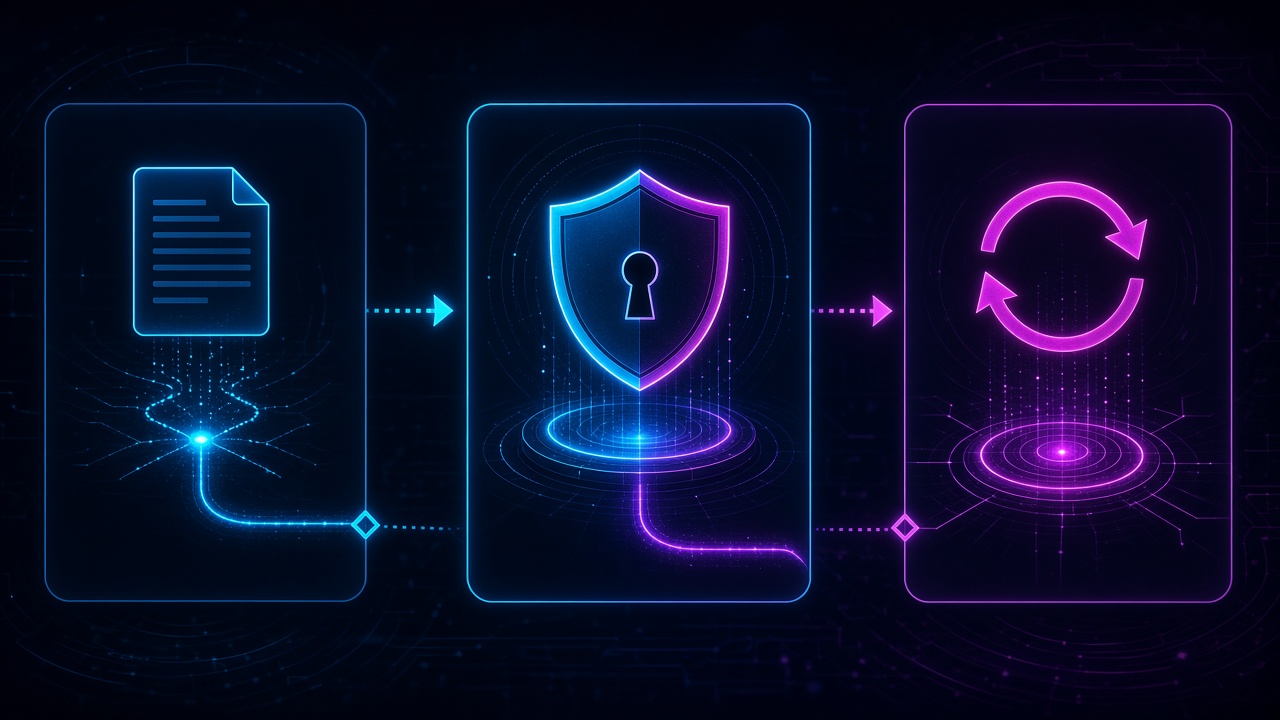
Vendor questions that belong here: who can mint a job token into our org, how long that token lives, whether artifacts are signed and pinned, and what happens when a cache or mirror still serves an old build. Evidence is a job inventory and a dated change, not a slide from the vendor.
04 Identity
Sessions and tokens are the second control. Human versus machine, on the path that actually ships.
Identity in the packet is not a directory screenshot. It is who can mint, where secrets live, whether MFA sits on the publish path, and who holds break-glass. Separate humans from bots. Separate short-lived OIDC job tokens from long-lived PATs. If one token leaks, the board needs blast radius in a sentence, not a product name.
| Token class | Blast radius | Revoke / rotate proof |
|---|---|---|
| Long-lived PAT / API key | Repo, registry, or cloud as scoped | Revoke ticket and new mint date |
| OIDC / short-lived job token | One pipeline, one audience | Job config and last run evidence |
| Bot account secret | Anything the bot can push | Rotation and reduced scope |
| Interactive session | Whatever that user can publish | Session revoke and MFA proof on the path |
Control questions: who can mint this week, when did we last rotate the live class, and what still works if we revoke tomorrow morning.
05 Ransomware
Restore is the third control. Ransomware talk is residual risk if publish or restore still works for an attacker.
Do not promise immunity because CI looks locked down. The packet line is simpler. Can a stolen identity or a replayed artifact still change production. Can you restore from a known-good copy with keys you still control. If either answer is weak, that is the ransomware-relevant residual. If both answers are strong, show the control, the last test date, and who ran it.
Budget language stays people hours: rotation, path hardening, and a restore drill you can repeat. It is not another scanner SKU justified by the news cycle.
06 Cloud exceptions
Exceptions are part of the packet. They need owners, expiry, and a compensating control.
Cloud and SaaS estates accumulate unsigned publish, long-lived tokens on a job, break-glass without MFA, and mirrors you still trust. Name those exceptions. Date them. Say what you will not spend. An exception without expiry is just an accepted hole with better stationery.
KRIs for the next meeting should match the four controls: unrotated secrets, jobs with long-lived tokens, unsigned publish, restore tests that did not run, and failed replay tests. Those numbers beat a stack of articles.
07 Replay buying criterion
Replayable findings are the fourth control. Fund only what shrinks a window you can measure and re-run.
Replay is a time box, not a slogan. An old token, webhook, or signed package can still succeed until you revoke, pin, or expire it. Detection is what logs would show if that happened. Residual is whatever still works after you take the step you are willing to fund.
| Replay window | Detection | Residual |
|---|---|---|
| Token or session still valid | Auth logs, unusual job | Until revoke completes |
| Signed or cached artifact | Publish job, registry audit | Until pin or deny list |
| Webhook or callback reuse | Idempotency and signature check | Until the old secret dies |
A finding is replayable when another team can run the same path, collect the same evidence type, and date the result. One screenshot is not that story. A buying criterion is revoke, pin, expire, and prove it again next quarter. It is not a logo that appeared next to the reporting.
08 This month
This month is operators and hours, not a press recap.
Take the ninety-day list and cut it to what people can do now. Rotate the live token class. Freeze or gate the worst publish path. Run one restore drill. Run one replay test another team can repeat. Name the people who can rotate this week. Name the next evidence date. If nothing changed after the reporting window, say no change, name the residual, and stop decorating the gap.

Cut vendor theater, CVE tourism, we are monitoring, and anything that names a client. Keep owners, runbooks, tickets, residual risk, and the decision you want from the board.
09 FAQ
These are the questions the room will ask. Short answers, still in full sentences.
What should a CISO put in the board packet after public reporting?
Map the window to four controls: publish path, sessions and tokens, restore, and replayable findings. Add owners, dated evidence, residual risk, and the decision you want. Do not add the articles.
Why not just circulate the articles?
The board cannot vote on a headline. They vote on residual risk and spend. Circulation without a packet trains them to expect a news briefing next time too.
How do publish paths differ from a news summary?
A path is who can ship, from where, with what identity and gate. A summary is someone else’s narrative about an event that may not be yours.
Which token facts belong in a packet versus an ops ticket?
The packet gets class, lifetime, blast radius, last rotate, and owner. The ticket gets the secret material and the runbook steps. Mixing those two is how packets become incident rooms.
What does replay mean for residual risk, in one sentence?
An old token or old artifact can still succeed until you revoke, pin, or expire the window, and until a test you can re-run says otherwise.
What if we have no change yet?
Say no change. Name residual risk. Name the next evidence date. That is honest packet language. Inventing a win is not.
Who signs the packet?
The CISO signs residual risk. Operators who can rotate this week sign the table. Unsigned rows are unfinished work.
When is the next packet, not the next headline?
Use a quarter rhythm on the KRIs above. The news cycle is not a meeting cadence.
Why avoid unconfirmed CVEs or victim names?
They are not your controls. They add noise and liability. They do not help a vote.
If you want a founder-led manual pentest on those paths, SquidSec will scope it in 15 minutes. No calendar URL. No hourly rate on this page. Write us. Mr. The Plague / SquidSec. U.S. Veteran-Owned. Cleveland.